
The 2025–2030 Dietary Guidelines
The pyramid, flipped.
HHS and USDA brought the pyramid back, and turned it on its head. Real food sits at the top, refined carbs slide to the bottom, and protein finally gets the room it deserves.
Three zones, one plate
What the new pyramid actually says.
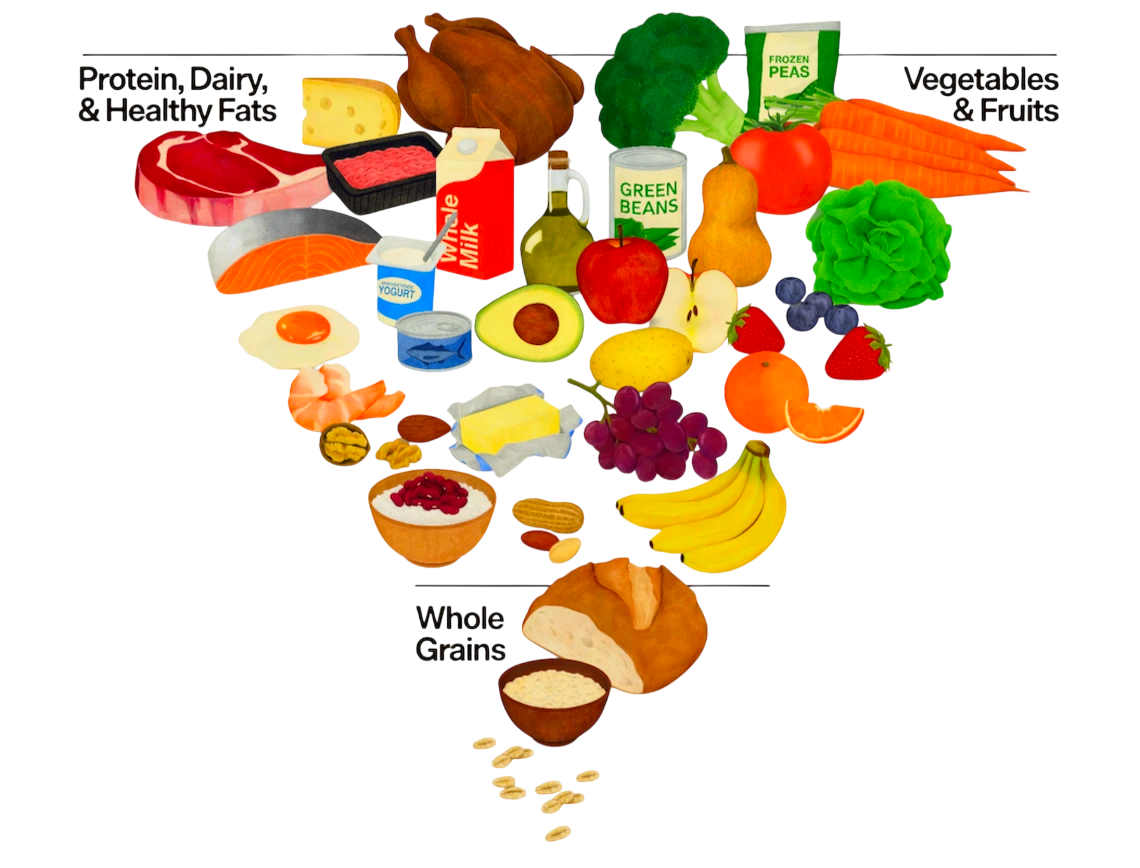
Visual based on the new pyramid from realfood.gov.
- 01
Protein, Dairy & Healthy Fats
The widest band, top-left. Animal protein, whole-fat dairy with no added sugars, eggs, fish, nuts, seeds, olives and avocados take centre stage.
- 02
Vegetables & Fruits
Sitting alongside protein at the top. Whole forms preferred over juice, the more colour on the plate the better.
- 03
Whole Grains
The narrow base. Choose oats, brown rice, whole wheat, quinoa, barley. Pull back on refined and ultra-processed carbs.
Why it's upside down
Real food first. Refined carbs last.
For decades the base of the pyramid was bread, pasta and cereal. The 2025 redesign flips that. The widest space goes to the foods that build and protect your body. Whole grains stay on the plate, but they no longer dominate it. Ultra-processed foods, added sugars and artificial additives sit firmly in the limit column.
5 years
These guidelines shape US public nutrition through 2030.
Seven priorities
What to actually do with all this.
01
Protein at every meal
Make protein the anchor of breakfast, lunch and dinner, not an afterthought.
02
Vegetables and fruits, daily
Whole forms preferred. Aim for variety and colour over counting servings.
03
Fats from whole foods
Nuts, seeds, seafood, eggs, olives and avocados. Skip the seed-oil shortcuts.
04
Whole grains over refined
Oats, brown rice and whole wheat in, white bread and sugary cereal out.
05
Limit ultra-processed foods
Cut back on added sugars, artificial additives and packaged snack foods.
06
Water as the default drink
Plain water and unsweetened drinks for hydration. Sodas and sweet juices stay rare.
07
Right-size your portions
Match plate size to your age, sex, body size and activity. One number does not fit all.
On the plate
Eat more of this. Ease up on that.
Eat more of
- Eggs, fish, lean poultry and lean meats
- Soy, tofu, lentils, beans and peas
- Whole-fat dairy with no added sugars
- Vegetables of every colour, every day
- Whole fruit, not juice
- Nuts, seeds, olives and avocados
- Seafood at least twice a week
- Whole grains: oats, brown rice, quinoa, barley
- Plain water as your default drink
Ease up on
- Sugar-sweetened drinks and sweet juices
- Foods with added sugars
- Refined grains: white bread, white rice, sugary cereal
- Ultra-processed snack foods
- Processed meats high in sodium
- Artificial additives and colourings
- Deep-fried fast food
- Late-night snacking out of habit
- Oversized portions of energy-dense foods
Across the lifespan
Good nutrition looks different at every stage.
Performance and prevention
Adulthood is about protecting muscle, supporting heart and metabolic health, and keeping ultra-processed foods to a minimum.
Where the new pyramid shows up
More than a poster on a wall.
01
School meals
National School Lunch and Breakfast menus, nutrient targets and food rules will be updated to match.
02
WIC
Women, Infants and Children food packages and counselling messages will follow the new guidance.
03
SNAP-Ed
Federal nutrition education materials will be rewritten around the new priorities.
Ready to find your number?
The Protein-O-Meter gives you a daily protein target built around your age, weight and goals, backed by 74 randomised trials.
Open the Protein-O-Meter